


Sturgeon’s World Well Lost
by Jeff Baker
First things first: Theodore Sturgeon was (as far as I know) straight.
The fact that I feel it necessary to make that statement would probably make him annoyed. And possibly make him laugh.
Sturgeon, (1918-1985) an esteemed writer of science fiction, fantasy, horror, mystery and even westerns, published his story “The World Well Lost” in the June 1953 issue of Universe Magazine.
Keep that date in mind: 1953.
This was one of the first if not the first sci-fi/fantasy story to present a sympathetic view of “homosexuality,” in the person of “The Loverbirds.” They are two aliens from the reclusive planet Dirbanu who are fugitives from their own world and arrive on a future Earth.
The pair do not speak, but they are physically affectionate with each other. Viewing them literally charms the populace of Earth (there are songs, board games and hats and pins and probably tee-shirts featuring the pair.) People who view their love feel better and become virtually ecstatic.
And it is not obvious immediately that the Loverbirds are of the same gender.
Their own planet wants the fugitives returned.
So they are sent in a prison ship, the pilots chosen for their seeming immunity to the charms of the Loverbirds.
There are at least a couple of pages of set-up and explanation of the ship and its small crew, and Sturgeon makes reference to a “warp” drive. Which the ship does not have. Over a decade later, Sturgeon would write for the original “Star Trek.”
The crew finds out the Loverbirds are telepathic, at least they can hear the thoughts of the crew.
As the reader might guess, things do not go as planned. And there is a twist in all of this, in the paragraph that begins:
“God,” said Rootes, “it figures. It really figures.”
I will do no spoilers here. And there could be several spoilers!
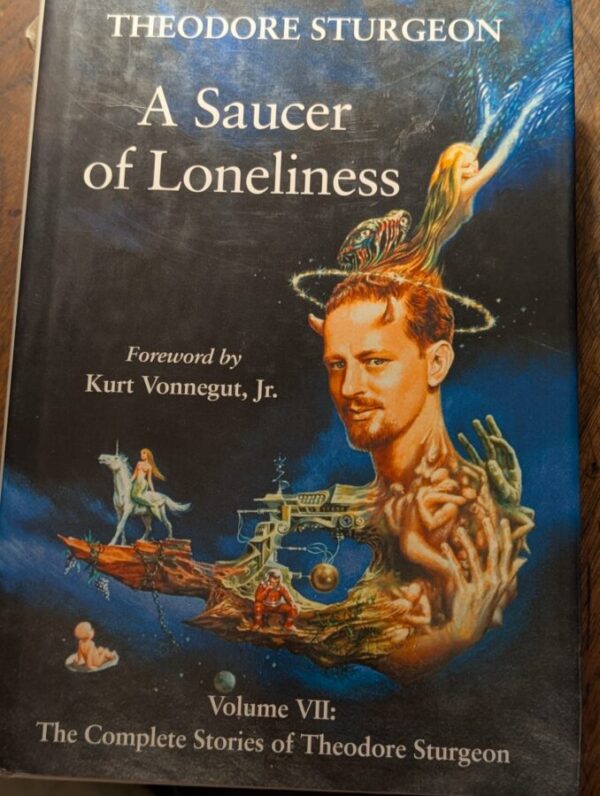
“The World Well Lost” has been reprinted several times, most notably in North Atlantic Books’ multi-volume set of the Complete Stories of Theodore Sturgeon. Volume VII.
Sturgeon liked breaking taboos in his fiction, and once said his most frequent subject was love.
And I will here wreck the mood and say I recommend anything Sturgeon wrote. It’s well worth the reader’s time.
And he was an interesting guy: he had been a trapeze artist in a circus at one time, and liked to enliven parties by doing backflips. He could also imitate the sound of power tools (like chainsaws) and was known to do so on request!
Keep that in mind as readers peruse his indescribable fiction, which Isaac Asimov described as “Caviar!”
Jeff Baker writes about reading and writing sci-fi, fantasy and horror and other sundry matters on or around the Thirteenth of every month. He wishes his readers a Happy Halloween and would talk about his longtime affection for Theodore Sturgeon’s work here except this author’s note would run into several dozen pages He writes at least one story a week on his blog https://authorjeffbaker.com/2026/10/11/fiction-and-poetry-in-the-steeple-flash-fiction-draw-challenge-results-for-october-2026-october-12-2026/ and wastes time on Facebook https://www.facebook.com/jeff.baker.524042 and BlueSky https://bsky.app/profile/jeffbakerauthor.bsky.social and on Mastodon (as “Mike Mayak.”) https://mastodon.otherworldsink.com/@MikeMayak